
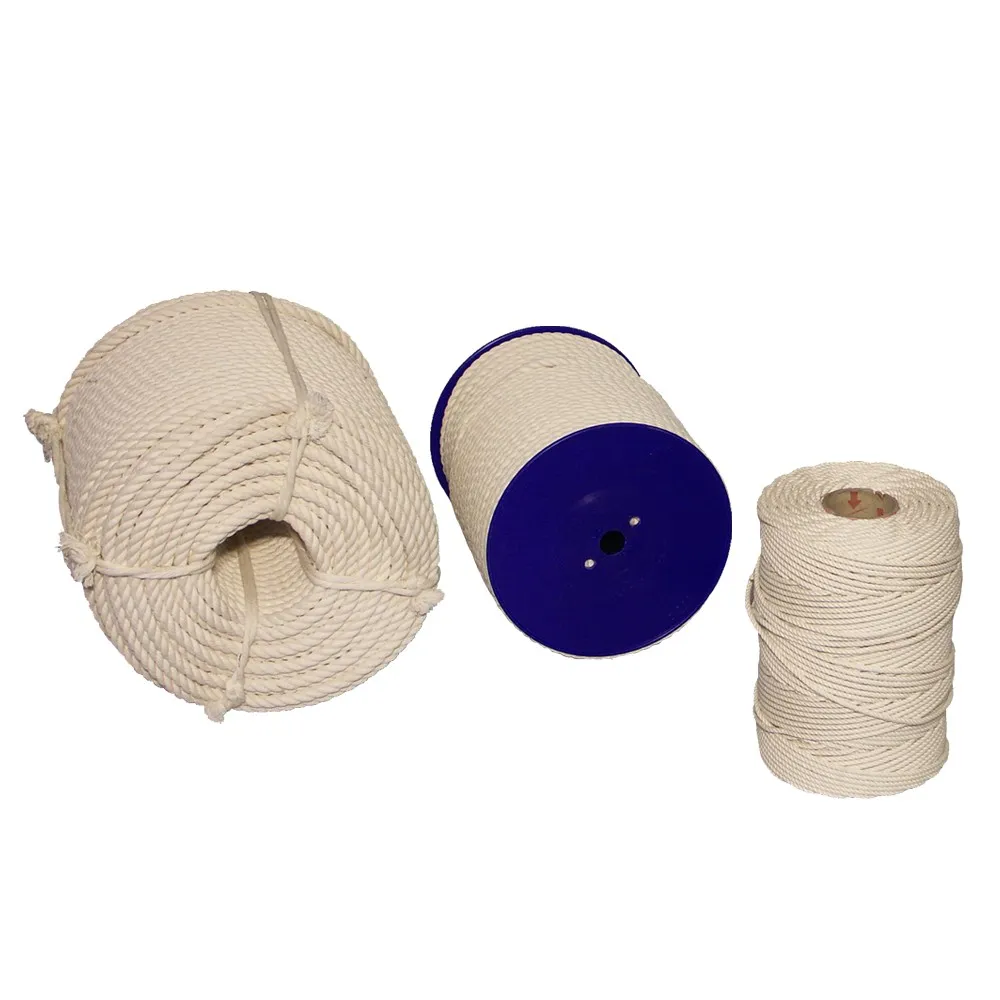
Cotton
Properties:
- Density: 1.38 g/cm³
- Melting point: Does not melt
- Elongation at break: approx. 20%
- Abrasion resistance: Low
- UV resistance: Low
- Water absorption: High
Applications:
- Lead ropes
- Decorations and art
- Macrame work
Visit our webshop, ropestore.com:
Buy at ropestore.com(opens in a new tab)Contact us with an inquiry
Contact usDescription
Cotton ropes are 3-strand ropes made of 100% cotton. These ropes are known for their softness and comfort in use, with a reduced risk of unpleasant friction or ”burns” while handling. Here is a detailed description:
Material and properties: Cotton ropes are made entirely from 100% cotton fiber, or alternatively from recycled cotton fibers.
- Virgin cotton: The cotton fibers used for rope production can be either virgin (natural) cotton fibers or recycled cotton from textile waste.
- Color: These ropes are known for their soft and comfortable feel in the hand, making them ideal for projects where comfort is important. They have a natural “beige white” color, which is the natural appearance of cotton. Cotton ropes have an elongation at break of approximately 20%. They absorb a lot of water and the fiber is sinking.
Applications: Cotton ropes have many uses and are especially popular in decorative and craft projects.
- Macramé: Cotton ropes are very popular for use as decorations and macrame work, where the softness and flexibility of the rope are valuable properties.
- Equitation: cotton ropes are often used as lead ropes for animals, where their gentle feel in the hand is beneficial.
Advantages: Cotton ropes offer a pleasant and comfortable user experience and are ideal for projects where both aesthetics and comfort matter. They provide a natural and relaxed feel while being durable and useful for a variety of purposes.
Specification
| Diameter [mm] | MBL [kp] | Weight [g/m] |
|---|---|---|
| 5 | 110 | 14 |
| 6 | 170 | 20 |
| 8 | 290 | 33 |
| 10 | 450 | 55 |
| 12 | 600 | 80 |
| 14 | 800 | 105 |
| 16 | 1100 | 120 |
| 20 | 1600 | 190 |
MBL: minimum breaking load. Stated breaking loads apply to new rope.