
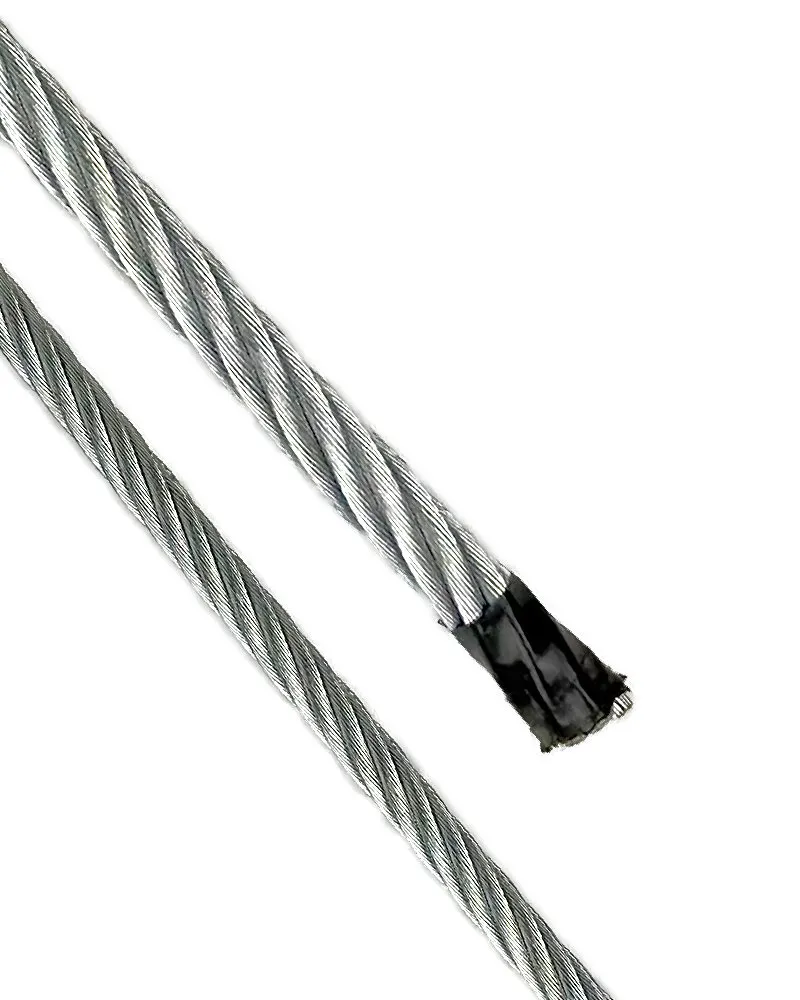
Steel wire
Steel ropes and wires of various types.
Visit our webshop, ropestore.com:
Buy at ropestore.com(opens in a new tab)Contact us with an inquiry
Contact usAnimal keeping, Industry & Infrastructure, Construction, Other products
Description
Steel wire ropes are used similarly to regular ropes in a wide range of applications and are available in various types and constructions. Below are some examples:
Solid steel wire ropes: Made exclusively from steel fibers or wires, either galvanized or stainless steel depending on the application.
Steel ropes with fiber core: These ropes combine thin steel fibers with synthetic fibers such as polyester or polypropylene in the core, making them slightly more flexible than solid steel ropes. Ropes with a fiber core are often designated as FC (Fiber Core).
Applications: Steel ropes of different types are used in various applications based on specific needs. Here are a few examples:
- Friction and wear resistance: Steel ropes are significantly more resistant to wear and tear compared to synthetic fiber ropes, making them suitable for applications with heavy abrasion.
- High temperatures: Due to their higher melting point compared to most synthetic fibers, steel ropes can withstand extreme temperatures, making them useful in industrial and manufacturing processes.
- Chemical processes: Steel ropes are less reactive with other substances and materials, allowing them to be used in many chemical processes where synthetic ropes may not be suitable.
Benefits: Steel ropes offer higher durability and heat resistance compared to synthetic ropes. They come in many variants to suit a wide range of applications and uses.
Specification
| Product | Construction | MBL [kp] | Material |
|---|---|---|---|
| Steel wire | 1x7 | 100 | Galvanized steel |
| Steel wire | 1x19 | 130 | Galvanized steel |
| Steel wire | 6x19+FC | 3500 | Galvanized steel |
| Steel wire | 6xWS(36)+FC | 5900 | Galvanized steel |
MBL: minimum breaking load. Stated breaking loads apply to new rope.