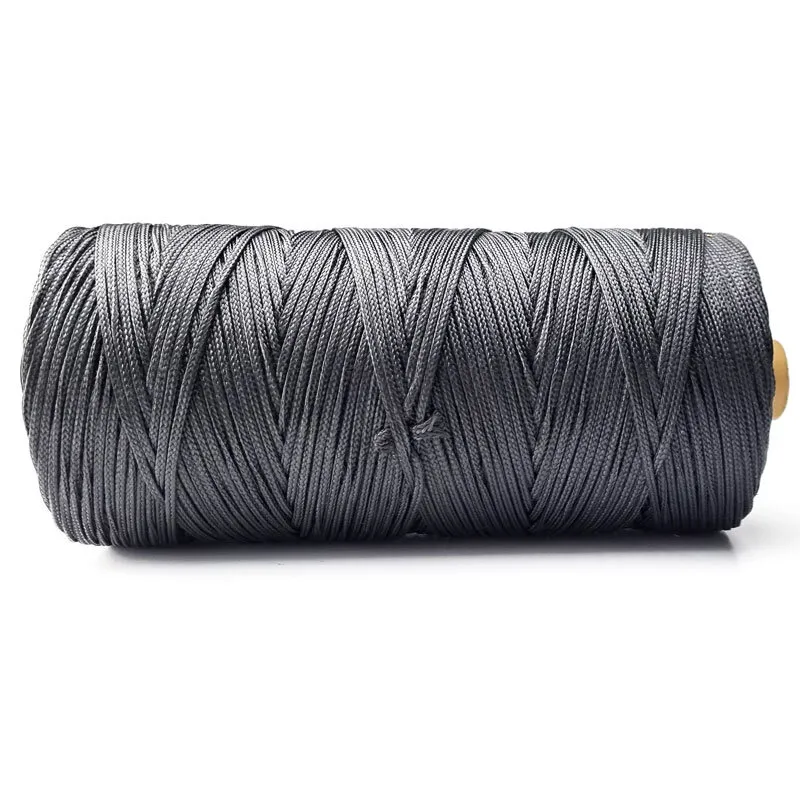
Bankline braided
Properties:
- Density: 1.14 g/cm³
- Melting Point: 220 °C
- Elongation at Break: approximately 40%
- Abrasion Resistance: Very high
- UV Resistance: Very high
- Water Absorption: Very low
Areas of Use:
- Netting
- Bankline and bushcraft
- Seaming
Visit our webshop, ropestore.com:
Buy at ropestore.com(opens in a new tab)Contact us with an inquiry
Contact usPleasure boats & Maritime ropes, Outdoor Activities, Twines & Cords
Description
Braided bankline made of polyamide is impregnated with coal tar to ensure optimal durability and resistance in demanding environments.
Material and properties: Braided banklines are made of thin, multifilament polyamide fibers braided into a strong and durable construction. These yarns are impregnated with coal tar, resulting in the so-called coal-tarred bankline. The material is extremely strong, UV-resistant, and characterized by a high breaking load and very good elongation.
Applications: Braided banklines are versatile and used in a wide range of areas.
- Nature and Outdoor Activities: Tarred, black polyamide twines are commonly referred to as “bankline” in outdoor settings. Their strength, elasticity, and ease of knotting make them a popular “all-purpose” string for outdoor enthusiasts.
- Fishing Industry: Traditionally used for repairing, tying, and assembling fishing nets and other gear, banklines are highly valued in the fishing sector.
- Whipping Rope Ends: Prevents fraying of thicker ropes, with the coal tar impregnation offering exceptional grip in knots and whippings. The string’s ability to stretch ensures tight knots that are virtually impossible to untie.
- Waterfowl Hunting: Ideal for hunting with decoys due to its sinking properties, resistance to water absorption, and ability to resist kinking or twisting.
Advantages: Braided bankline is ideally suited for applications requiring a strong, elastic, and knot-friendly string that resists rotation. Unlike traditional twisted banklines, braided banklines do not kink when twisted, ensuring reliability in various settings. They are commonly used for assembling fishing nets and traps, whipping rope ends, decoy hunting, lashings, wire coverings, and for tying and repairing nets. The versatility of this string makes it an indispensable tool for fastening, hanging, repairing, and lashing in both outdoor and repair work.
Specification
| Diameter [mm] | MBL [kp] | Weight [g/m] |
|---|---|---|
| 1,2 | 29 | 1,8 |
| 1,6 | 52 | 3,6 |
| 2,0 | 80 | 5,6 |
MBL: minimum breaking load. Stated breaking loads apply to new rope.