
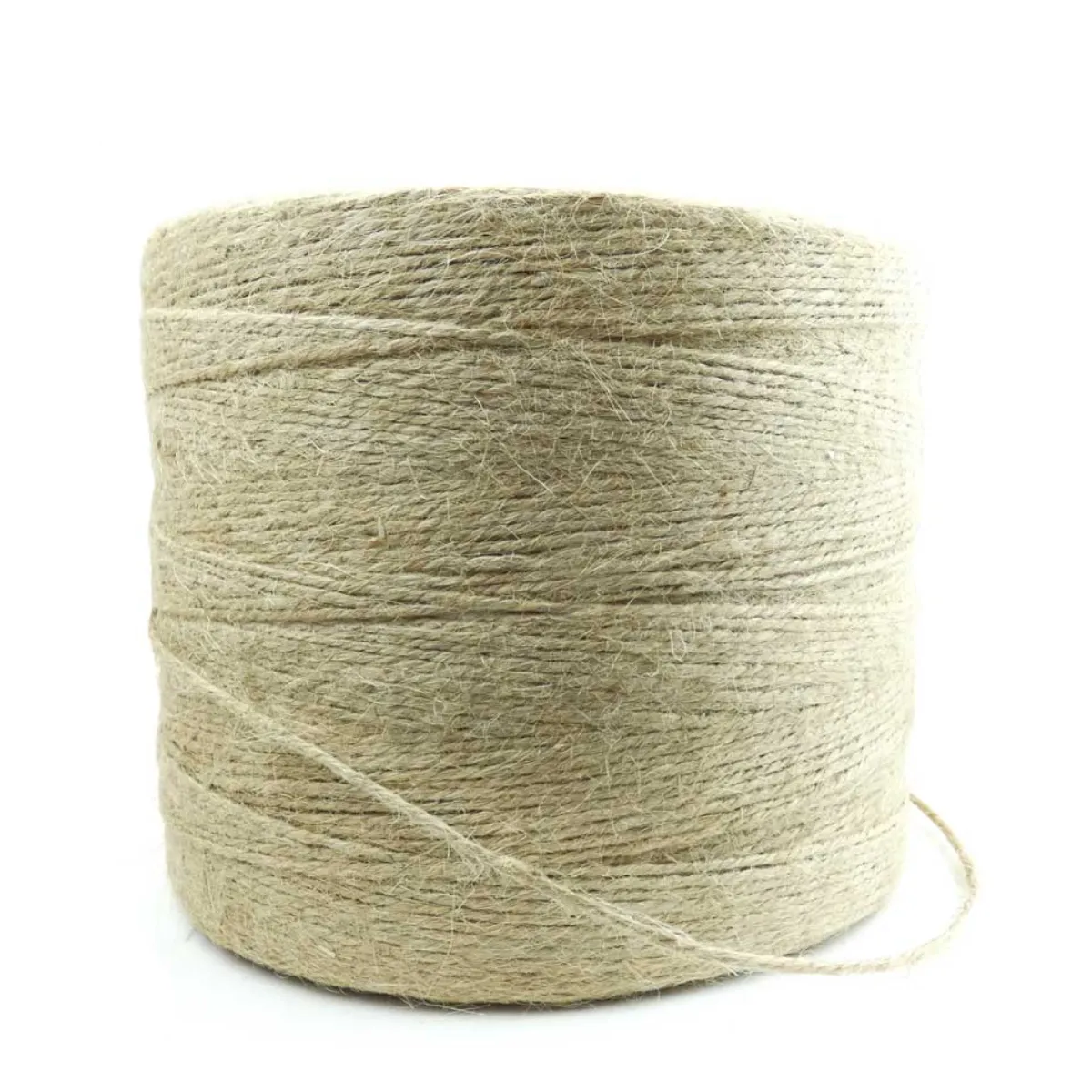
Jute Twine
Properties:
- Density: 1.40 g/cm³
- Melting Point: Does not melt
- Elongation at Break: Approximately 15%
- Abrasion Resistance: Low
- UV Resistance: Low
- Water Absorption: Very high
Applications:
- Tying twine
- Garden twine
- Crafts & Hobbies
- Parcel twine
Visit our webshop, ropestore.com:
Buy at ropestore.com(opens in a new tab)Contact us with an inquiry
Contact usDescription
Jute twine of the highest quality can be used for everything from rope making to tying up plants in the garden or wrapping gifts.
Material and properties: Jute twine is made from 100% natural and uncolored jute. The fibers are light beige in color and do not contain JBO (Jute Batching Oil), making them safe for the environment and nature.
Applications: Jute twine can be used for various projects in macramé, crafts, weaving and a variety of other creative applications.
- Tying up plants: Because jute twine is simple and environmentally friendly, it can be used to tie up plants both commercially and in your own garden and planter boxes. In Germany, jute twine is often referred to as “Tomatentouw,” which means tomato string.
- Weaving: Like many other yarns, jute twine is also suitable for weaving. Art, rugs, tablecloths, blankets, etc., are some examples of what can be created with jute twine on the loom.
- Binding: As simple and environmentally friendly packaging twine, jute twine can be used to wrap packages and gifts.
Advantages: Jute twine is a natural fiber known for its usefulness in rope and cordage manufacturing, sacks, packaging, gift wrapping, weaving, macramé, crafts and decorations. Its natural biodegradability also makes it an excellent choice for outdoor use, especially for tying up plants and crops.
Specification
| Designation | Diameter [mm] | MBL [kp] | Weight [g/m] |
|---|---|---|---|
| 1500/3 | 2 | 22 | 2 |
MBL: minimum breaking load. Stated breaking loads apply to new rope.