Masonry twine
Properties:
- Density: 1.38 g/cm³
- Melting point: 260 °C
- Elongation at break: approximately 20%
- Abrasion resistance: Very high
- UV resistance: Very high
- Water absorption: Low
Applications:
- Mason’s line
- Paving and casting
- Chalk line
Visit our webshop, ropestore.com:
Buy at ropestore.com(opens in a new tab)Contact us with an inquiry
Contact usDescription
Mason’s line – Mason’s line is thin twines used in construction for layout and measurement purposes. Here is a full description of mason’s line:
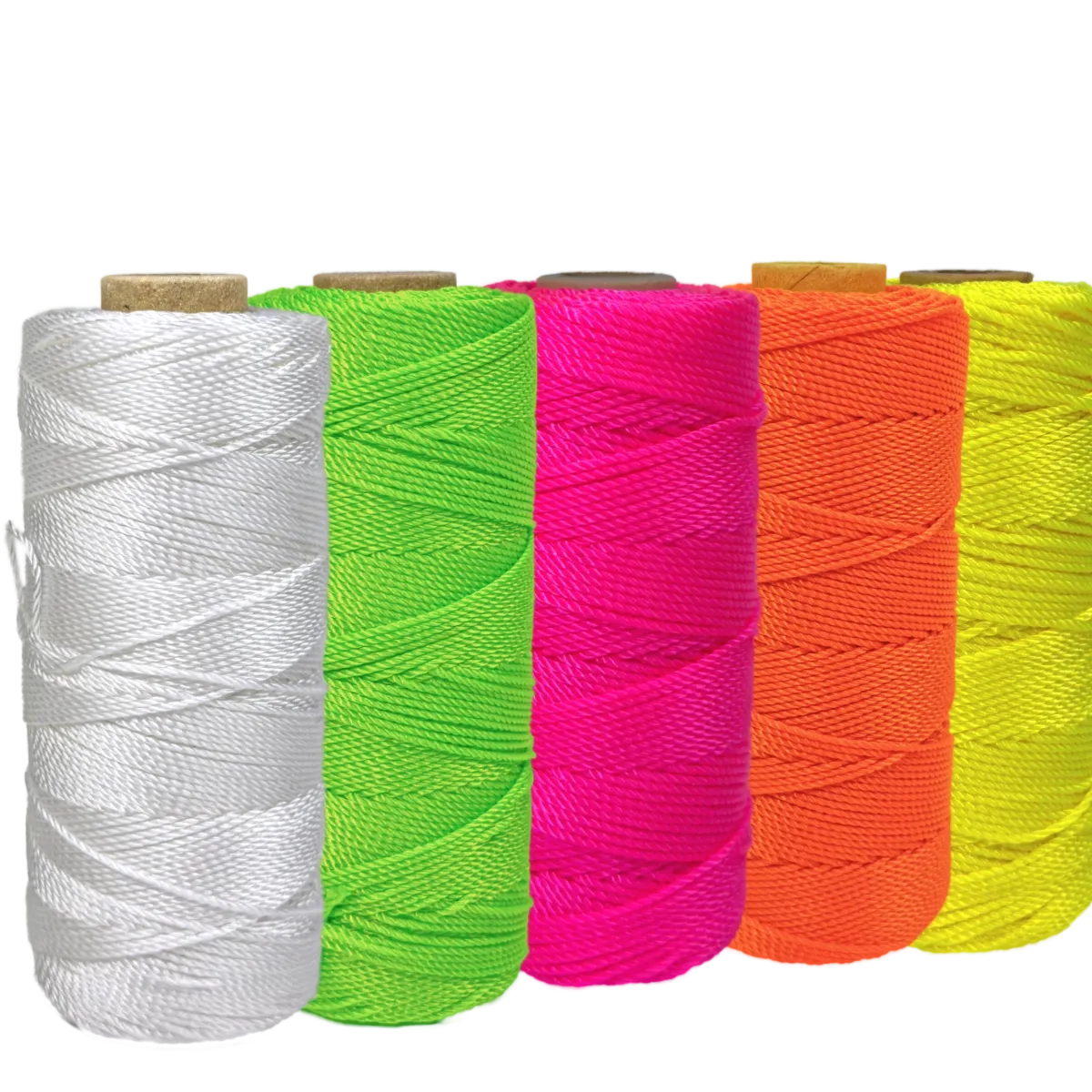
Material and properties: Masonry twines are thin and strong polyester multifilament twines, often in bright and highly visible colors.
- Polyester multifilament: twines made of 100% polyester multifilament provide durability and resistance to abrasion and UV radiation.
- Bright colors: The twines are often manufactured in bright and highly visible colors such as fluorescent pink or neon green.
Applications: Mason’s lines are utilized in various applications:
- Masonry twine: Used by masons and builders to establish horizontal and vertical layout lines on buildings and other structures. It helps ensure that masonry or construction work is straight and level.
- Layout string in construction: Mason’s twine is used as a layout string for measuring and marking exact points and lines in construction projects, including wall and roof constructions. It is also commonly used as an aid in paving and casting.
- Layout string in gardening: In gardening, mason’s line is used to create straight rows of plants, fences or to mark boundaries and walls in the garden.
Advantages: Mason’s line is strong and durable, making it a reliable tool for ensuring precision and accuracy in construction and gardening. The fluorescent colors provide extra visibility and are often used in outdoor environments.
Specification
| Designation | Diameter [mm] | MBL [kp] | Weight [g/m] |
|---|---|---|---|
| Nr 6 | 1,2 | 22 | 0,6 |
| Nr 8 | 1,6 | 40 | 0,8 |
MBL: minimum breaking load. Stated breaking loads apply to new rope.