
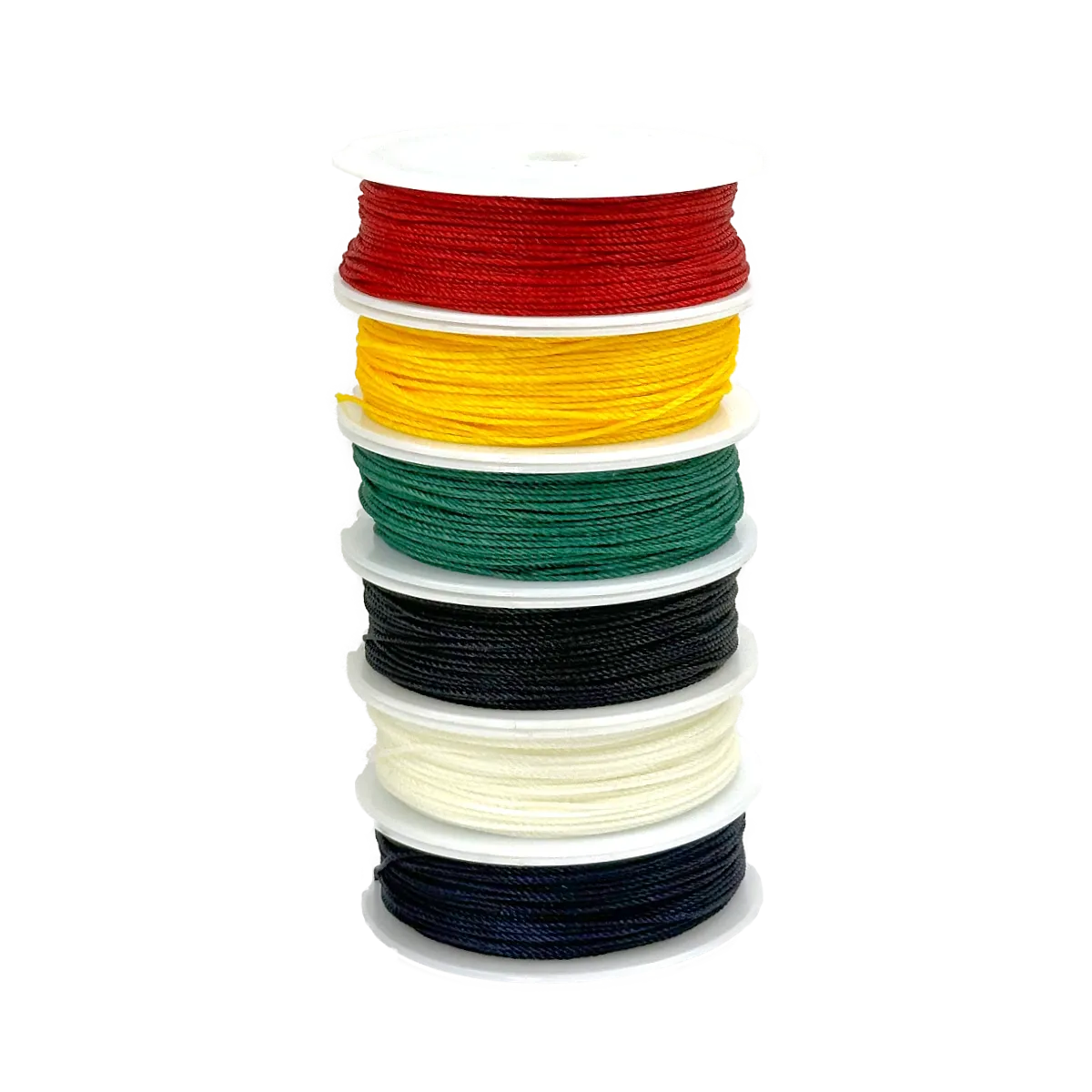
Waxed whipping twine
Properties:
- Density: 1.14 g/cm³
- Melting point: 220 °C
- Elongation at break: approximately 40%
- Abrasion resistance: Very high
- UV resistance: Very high
- Water absorption: Very low
Applications:
- Lashing
- Whipping
- Seizing
- Repair & sewing
Visit our webshop, ropestore.com:
Buy at ropestore.com(opens in a new tab)Contact us with an inquiry
Contact usDescription
Waxed whipping twine made from twisted polyamide is a cord designed for a variety of uses.
Material and properties: Waxed whipping twine is made from twisted, thin multifilament polyamide fibers. These threads are extremely strong and resistant to UV radiation. They are impregnated with a special wax that further enhances their strength and UV resistance. The wax also prevents slipping when tying knots. High breaking strength and excellent elongation characterize this type of twine.
Applications: Waxed whipping twine is used in many different areas. Some examples of applications include:
- Seizing: Sometimes, you want to create a loop on a rope without splitting it; in such cases, thin, strong threads like these are ideal for seizing.
- Whipping: To prevent the end of a thicker rope from fraying, waxed whipping twine is used to provide excellent grip in knots and whippings. The twine’s unique ability to stretch allows knots to be tightened securely, making them virtually impossible to undo.
- Lashing: These threads are generally well-suited for lashing or securing and tying things down, as the wax prevents the twine from slipping and the polyamide’s elasticity allows knots to be tightened securely without the risk of them coming undone.
Advantages: Waxed whipping twine is preferred when a strong, elastic, and knot-friendly twine is needed for whipping and other splicing work.
Specifikation
| Diameter [mm] | MBL [kp] | Weight [g/m] |
|---|---|---|
| 0,8 | 19 | 1,1 |
| 1,0 | 29 | 1,8 |
MBL: minimum breaking load. Stated breaking loads apply to new rope.